There are basically two types of unpleasant realities that everyone has to accept at some points in life: involuntary and voluntary.
The involuntary realities are things that have happened outside of your control, whose necessity is undeniable—anything from your car needing to be repaired to having to undergo a medical procedure for the sake of your health.
The voluntary realities are when you actively choose to accept something you don't like because the advantages outweigh the disadvantages. For example, you take a new job because it pays well, even though you don't like the boss.
German has an idiomatic phrase for having to accept something that can fit either of the above realities: etwas in Kauf nehmen.
Das ist es nicht wert, dass wir dafür so viele Verschlechterungen dann in Kauf nehmen müssen.
That's not worth having to accept so many changes for the worse.
Caption 9, Deutsche-Welle-Nachrichten: Massenprotest gegen TTIP
Play Caption
DWDS defines etwas in Kauf nehmen in both senses:
1. Having to put up with something (a difficulty or the like); having to put up with something unpleasant or uncomfortable by necessity.
2. Someone voluntarily accepts something negative (a disadvantage or unpleasant side effect) if the positive incentive outweighs the negative overall.
Zurzeit muss man entweder eine stundenlange Zugfahrt in Kauf nehmen oder man fliegt.
Currently, you either have to put up with an hours-long train ride, or you fly.
Captions 22-23, DW-Nachrichten: Der Traum vom Hyperloop
Play Caption
... dass die einem normalen Risiko, wie man's zum Beispiel auch beim Straßenverkehr in Kauf nimmt, entsprechen.
... so that they correspond to a normal risk, as one would also have to accept in road traffic, for example.
Captions 50-51, Abenteuer und Sport: Fallschirmspringen
Play Caption
According to Redensarten, the idiom originated historically with etwas mit in den Kauf nehmen. A buyer would sometimes get some additional goods with the purchase if the trader did not have enough small change on hand to give back to the buyer.
Also, lenders sometimes charged interest by asking borrowers for goods that the lenders didn't really need, but which they accepted in order to do business at all. This led to the meaning "to accept an unwelcome addition to something that is otherwise advantageous."
Further Learning
Watch the full-length videos above on Yabla German to see the phrase used in different contexts. You can additionally write some some sentences with "We had to accept that..." or "I had to accept that..." and practice translating them into German using in Kauf nehmen.

In previous lessons, we've examined adjectives ending with -bar and adjectives with un- and -los. This week, we'l look at the ending -sam. The nice thing about adjectives, as you may remember, is that the related adverb is often the exact same word rather than having a different suffix.
The word sparsam is a positive adjective related to trying to save money, and could also be translated as "frugal" or "thrifty." The word geizig is less flattering, and essentially means "stingy."
Das ist sehr sparsam!
This is very economical!
Caption 38, Der Trabi: Das Kultauto aus dem Osten
Play Caption
While interviewing individuals who are against vaccination, comedian Lutz van der Horst heard the following statement:
Es gibt keine einzige wissenschaftliche Studie, die das wirklich klar belegt, dass Impfen wirksam und vernünftig ist.
There is not a single scientific study that really clearly proves that vaccination is effective and sensible.
Captions 19-20, heute-show: Lutz van der Horst trifft auf Impfverweigerer
Play Caption
Here are a few more common adjectives ending with -sam. The first two may be known to you through the related verbs raten ("to advise”) and unterhalten ("to entertain").
... ist es auf jeden Fall ratsam, sich so gut wie möglich zu benehmen.
... it is definitely advisable to behave as well as possible.
Captions 55-56, Deutsch mit Eylin: Tischsitten
Play Caption
So unterhaltsam kann Lernen sein!
Learning can be so entertaining!
Caption 5, Theaterstück über gesunde Ernährung: Henrietta in Fructonia
Play Caption
„Aber ich war so grausam und gemein zu dir“, weinte die Prinzessin.
"But I was so dreadful and mean to you," cried the Princess.
Caption 84, Märchen - Sagenhaft: König Drosselbart
Play Caption
Und nun wurde auch ein Schwein auf sie aufmerksam.
And then a pig became aware of them.
Caption 58, Märchenstunde: Der Lebkuchenmann
Play Caption
Immer wenn du weg bist, bin ich so einsam.
Whenever you're away, I am so lonely.
Caption 7, Janoschs Traumstunde: Post für den Tiger
Play Caption
Warum die Atmosphäre zwischen uns beiden so seltsam in letzter Zeit ist, kann ich mir auch nicht erklären.
I can't figure out either why the atmosphere between us has been so strange lately.
Caption 48, Die Wohngemeinschaft: Probleme
Play Caption
Many of these words become nouns with the addition of -keit. Have a look:
Danke für die Aufmerksamkeit.
Thanks for your attention.
Caption 28, Bundesländer und ihre Rezepte: Brandenburg
Play Caption
Langfristige Studien zur Wirksamkeit des Superabsorbers gibt es bisher keine.
There haven't been any long-term studies of the super absorber's effectiveness yet.
Caption 37, Wunderkräfte aus der Windel: Wasserspeicher für Blumenerde
Play Caption
Aber Flora und Fauna können sich in dieser Einsamkeit noch ungestört entfalten.
But in this solitude, flora and fauna can develop without being disturbed.
Caption 7, Die letzten Paradiese: Die Schönheit der Alpen 2
Play Caption
Further Learning
Make flashcards in order to memorize the adjectives above. You will find other adjectives with -sam on Yabla German, of course.

Or as you'd say in German: Lass uns über „lassen“ reden. The verb lassen can be translated in many different ways: "to let," "to leave," or "to have," among others. Let's take a look today at some examples, and see if we can learn how the different contexts affect the meanings and the translations of the word.
Lange klingeln lassen und dann wie gehabt verfahren.
Let it ring for longer and then proceed as usual.
Caption 38, Antilopen Gang: Enkeltrick
Play Caption
Also lassen Sie mich mal nachsehen, welche Termine noch frei sind.
So let me take a look what appointments are still available.
Captions 41-42, Berufsleben: das Vorstellungsgespräch
Play Caption
Ich lass dich nicht raus, ich lass dich nicht gehen.
I won't let you out, I won't let you go.
Caption 15, Ab durch die Heimat: 4 Comedians unterwegs im Südwesten
Play Caption
As you see above, a common translation of lassen is "to let."
Ich kann euch versprechen, dieser Film lässt niemanden kalt.
I can promise you, this movie will leave no one unmoved.
Captions 47-48, Twinfruit: Glaubhaftigkeit in der Werbung
Play Caption
Du lässt mich niemals allein.
You'll never leave me alone.
Caption 42, Sophia: Niemals Allein
Play Caption
Sometimes too, lassen is translated as "to leave," but not in the sense of leaving (verlassen) a place.
König Konrad schickte Boten voraus und ließ sie in der Stadt verkünden.
King Conrad sent messengers ahead and had them make an announcement in the city.
Captions 36-37, Deutsche Sagen: Die tapferen Weiber von Weinsberg
Play Caption
In cases where somebody is following orders, it wouldn't make much sense (as in the example above) to say the King "let" them make an announcement. In cases like this, you'll occasionally understand lassen as "to have."
Auch Natali will sich das nicht entgehen lassen.
Natali doesn't want to let herself miss out on this either.
Caption 50, Abenteuer Nordsee: Unter Riesenhaien und Tintenfischen
Play Caption
Often, when lassen is used in a reflexive sense with sich, it's not translated at all. In the example above, it could just as well have been translated as "Natali doesn't want to miss out on this either." In such cases, sich lassen is often redundant in translation.
... um meine neue Adresse in meinen Personalausweis eintragen zu lassen.
... to register my new address on my identity card.
Caption 3, Deutsch mit Eylin: Personalien und Namen
Play Caption
Wann haben Sie sich scheiden lassen?
When did you get divorced?
Caption 17, Yabla Gerichtshof: Probleme des Zusammenlebens
Play Caption
The sentences above could have been translated as "... to let my new address be registered on my identity card" and "When did you let yourself get divorced," but this seems pretty clumsy. In these cases, the better translation for sich eintragen lassen is "to register," and for sich scheiden lassen "to get divorced."
Last but not least, I'll "let" you see some example of some common idioms using the verb lassen:
Sie haben meiner Tochter schöne Augen gemacht und sie dann sitzen lassen.
You made eyes at my daughter and then abandoned her.
Caption 20, Oskar; Gehen, wenn es am schönsten ist Loslassen
Play Caption
Du kannst es ja nicht lassen.
You just can't resist.
Caption 85, Alexander Hauff: Showreel
Play Caption
ich will niemanden im Stich lassen.
I don't want to let anyone down.
Caption 19, Nicos Weg: Lernen
Play Caption
Du kannst es nicht lassen is a bit like the English "You just couldn't leave it alone." As der Stich can mean a sting or a stab wound, the saying im Stich lassen, which first appeared in the 1400s, may be related to jousting: if someone left a comrade behind, they risked being stabbed! Luckily, we live in a society today where such violence is socially and legally unacceptable.
Further Learning
Search for lassen in its various conjugations on Yabla German to see the verb used in different contexts. You may also want to read more about it in the previous Yabla lesson "German verbs connected with lassen."

In our recent newsletters about giving directions and driving, one verb that hasn't come up yet is wenden. This verb and its reflexive form sich wenden an have different meanings and a multitude of possible translations.
The verb abbiegen means "to turn," for example when you are in a car and have to turn left. But when it comes to turning the car around completely, you would often use the verb wenden. It signifies a turnaround, reversal, or shift.
Filmpferde müssen viel können: steigen, sich verbeugen, blitzschnell wenden oder todesmutig vor ein Motorrad galoppieren.
Film horses have to be able to do lots of things: rear up, bow down, turn lightning fast or gallop undaunted by death in front of a motorcycle.
Captions 1-2, Für Tierfreunde: Pferde beim Film
Play Caption
It also comes in handy when you talk about turning something over, like flipping a pancake or, in this case, a sausage:
Ein anderes Highlight in Walter Günthers Werkstatt: ein Grillrost, der die Würstchen automatisch wendet.
Another highlight in Walter Günther's workshop: a grill that automatically turns sausages.
Captions 24-25, Erfinder: Nie erfundene Erfindungen
Play Caption
This may have already occurred to you, but the noun die Wende is indeed related. It is used to talk about the dismantling of the Berlin Wall and subsequent changes after 1989.
Warum nennt man die Zeit im Herbst neunzehnhundertneunundachtzig in der DDR die Wende?
Why do you call the time in the fall of nineteen hundred eighty-nine in the GDR "the turnaround" ?
Captions 10-11, Bundesrepublik: Deutschland Einbürgerungstest
Play Caption
The noun can generally be used to describe a "turn of events," like in this caption:
Während die Männer ihren Doppelsieg feiern, nimmt das Damenrennen eine dramatische Wende!
While the men are celebrating their double win, the lady's race takes a dramatic turn!
Captions 58-59, Knallharte Sportler: Ironman in Frankfurt
Play Caption
Now let's look at sich wenden an, which has a more figurative meaning of "turning to" someone:
Autofahrer, die am Unfallmeldedienst teilnehmen wollen, können sich dafür an ihren Autoversicherer wenden.
Drivers who want to participate in the accident reporting service can contact their auto insurance company to do so.
Captions 45-56, Sicherheit im Straßenverkehr: Versicherer entwickeln automatischen Notruf für alle Autos
Play Caption
Du kannst dich natürlich auch direkt an mich wenden.
You can also, of course, reach out to me directly.
Caption 60, Großstadtrevier: Von Monstern und Mördern
Play Caption
Further Learning
Look at the placement and integration of sich wenden an in sentences on Yabla German and try to construct your own sentences.
Among the first words you learn in German are langsam (slow) and schnell (fast). Let's take a look today at some more detailed terms related to driving tempos.
Boote müssen sich von den Meeressäugern fernhalten und sie müssen langsam fahren.
Boats must stay away from the marine mammals and they must drive slowly.
Captions 28-29, Langsam gesprochene Nachrichten: Schwangere Schwertwale im Pazifik
Play Caption
Wenn die Straße frei ist, abends oder nachts, dann kann man sicherlich schon mal schnell fahren.
If the street is empty, evenings or at night, then you can certainly drive fast sometimes.
Captions 33-34, AutoMotoTV: Schnell fahren auf der Autobahn
Play Caption
As you see above, langsam fahren is "to drive slowly," and schnell fahren is "to drive quickly." The adverbs langsam and schnell can also be expressed in comparative and superlative forms: langsamer fahren and schneller fahren ("to drive slower" and "to drive faster"), as well as am langsamsten fahren and am schnellsten fahren ("to drive slowest" and "to drive fastest").
The related noun for "slow driving" is das Langsamfahren, and for "fast driving" das Schnellfahren. A person who drives quickly is called der Schnellfahrer or die Schnellfahrerin.
... fahren wir Schritttempo, wir dürfen uns dort überall bewegen,
... we drive at walking speed, we are allowed to go everywhere there,
Caption 72, Rollendes Vergnügen: Segway-Touren
Play Caption
The term das Schritttempo means "walking speed" and Schritttempo fahren means "to drive very, very slowly." The street sign for this is usually used in areas with a lot of pedestrians or where children are at play. It's a white sign with a red circle, in which the words SCHRITT FAHREN appear in black capital letters.
Ich kann jetzt auch bremsen und anhalten.
I can now also brake and stop.
Caption 40, Fahrschule: Wie man die Kupplung bedient
Play Caption
The verb bremsen means "to stop," and has the related noun die Bremse ("the brake"). Just like in English, this is more commonly seen in the plural form die Bremsen ("the brakes").
Im Falle einer Bedrohung können sie plötzlich schnell beschleunigen.
In the event of a threat, they can suddenly accelerate quickly.
Caption 72, Die Top Ten: Die 12 freundlichsten Meerestiere der Welt
Play Caption
The verb beschleunigen is "to accelerate", and its direct antonym is entschleunigen—"to decelerate."
Cool, gib Gas, schnapp ihn dir!
Cool, step on the gas, get him!
Caption 74, Großstadtrevier: St. Pauli rettet HSV
Play Caption
The phrase Gas geben is an expression that literally means "to give gas," but is similar to the English idiom "to step on the gas," which is how you make a motor vehicle accelerate.
Further Learning
Search for some other adjectives and adverbs for "slow" (such as träge and schleppend) and "fast" (such as zügig and rasant) on Yabla German. To learn some more driving terms, watch the videos Schnell fahren auf der Autobahn and Wie man die Kupplung bedient.
Thanks for reading! Stay tuned for our next lesson and send your topic suggestions to newsletter@yabla.com.
From buying new hard drives to cleaning out garages, humans are often preoccupied with storing information as well as objects and materials.
The verb etwas lagern essentially means "to store something." We use it to talk about putting physical objects in an external location for a longer period of time.
Aber keine Sorge, so lang haben die Kisten ja nicht gelagert.
But don't worry, the boxes haven't been stored here that long.
Caption 48, Die Pfefferkörner: Endspurt
Play Caption
Können sie jetzt Spreewaldgurken drin lagern.
Now they can store Spreewald pickles in there.
Caption 47, heute-show 30 Jahre Mauerfall: So feiern die Deutschen ihre Einheit
Play Caption
We always use the verb speichern when we talk about saving files, websites, emails, and other digital items:
Verwendet also das Lesezeichen-Menü, wenn ihr ein Video zu einem späteren Zeitpunkt sehen möchtet oder einfach euren ganzen Lieblingscontent speichern wollt.
So use the bookmark menu if you'd like to watch a video at a later time or just want to save all your favorite content.
Captions 31-33, Yabla-Anleitung: Lieblingsvideos markieren
Play Caption
Mailbox... speichern.
Mailbox... save.
Caption 4, Nicos Weg: Reklamation
Play Caption
At the same time, speichern is often used to describe the storage of substances within a particular body, like CO2 and water in plants:
In den tropischen Regenwäldern am Amazonas ist zum Beispiel so viel CO-zwei gespeichert, wie wir weltweit innerhalb von fünfzehn Jahren freisetzen.
In the tropical rainforests along the Amazon River, for example, as much CO-two is stored as we release worldwide within fifteen years.
Captions 16-17, OroVerde: Regenwald schützen CO2, Regenwald und Klimaschutz
Play Caption
Das Vierzigfache ihres Eigengewichts können sie aufnehmen und speichern.
They can absorb and store forty times their own weight.
Caption 16, Wunderkräfte aus der Windel: Wasserspeicher für Blumenerde
Play Caption
Two related nouns to know are der Vorrat and der Speicher:
Der fertige Honig dient der aktuellen Ernährung des Bienenvolkes, der Aufzucht der Brut und als Vorrat für den Winter.
The finished honey is used as day-to-day nutrition for the bee colony, for raising the brood, and as a supply for the winter.
Captions 31-32, Für Tierfreunde Aktion Tier: Die Honigbiene
Play Caption
Die Alpenseen sind nicht die einzigen großen Wasserspeicher in den Bergen.
The alpine lakes are not the only large water reservoirs in the mountains.
Caption 29, Alpenseen: Kühle Schönheiten
Play Caption
Another important verb is verstauen which means to stow something or put it away. If you fly to or within Germany, you will most certainly hear this, as it is often used when referring to carry-on luggage.
Further Learning
Search for speichern and lagern on Yabla German to see more examples of these verbs in use.

The verb erklären has two very different meanings, as does its noun form die Erklärung. One word having multiple meanings seems to happen more often in German than in English, if only for the fact that the German language has far fewer words than English. With fewer words in a language, it's more likely that a single word will have multiple meanings than in a language with a larger vocabulary!
The most common meaning of erklären is "to explain":
Kann jemand erklären, was ein Binnenhafen ist?
Can someone explain what an inland port is?
Caption 27, Bundesländer und ihre Rezepte: Nordrhein-Westfalen
Play Caption
Wir erklären euch, wie man in Deutschland Ostern feiert.
We'll explain to you how you celebrate Easter in Germany.
Caption 3, Cettina und Sabine: Ostern
Play Caption
And the same applies to its noun form, die Erklärung:
Vielleicht gibt's eine einfache Erklärung für seine Angst.
Perhaps there's a simple explanation for his fear.
Caption 62, Großstadtrevier: Von Monstern und Mördern
Play Caption
Es braucht Erklärungen, um die Brutalität und Banalität des Unrechts zu verstehen.
Explanations are required to grasp the brutality and banality of this injustice.
Caption 19, DDR zum Anfassen: Ganz tief im Westen
Play Caption
However, the second most common meaning of the verb erklären (and its noun equivalent die Erklärung) is as follows:
Kein Problem mehr für die Bewohner vor Ort, erklären sie stolz.
No problem anymore for the local residents, they declare proudly.
Caption 20, 30 Jahre: Menschen für Menschen
Play Caption
Ich erkläre hiermit, dass Sinus einem Tierheim übergeben wird.
I hereby declare that Sinus will be handed over to a shelter.
Caption 70, Yabla Gerichtshof: Das verzogene Hündchen
Play Caption
Note that the noun die Erklärung, when used with the meaning "declaration," is often paired with another noun as the latter half of a compound noun:
Jetzt also die Liebeserklärung an das Meer.
So now, the declaration of love for the sea.
Caption 26, Herbert Grönemeyer: stellt sein neues Album vor
Play Caption
Eine entsprechende Absichtserklärung zwischen der People's Bank of China und der Deutschen Bundesbank wurde am vergangenen Freitag in Berlin unterzeichnet.
A corresponding declaration of intent between the People's Bank of China and the German Federal Bank was signed last Friday in Berlin.
Captions 3-4, Frankfurt wird Handelszentrum: für die chinesische Währung Yuan
Play Caption
There are a number of German verbs nouns for "declare," such as the rather obvious deklarieren and the less obvious verkünden. Some nouns using die Erklärung as "to declare," such as die Kriegserklärung, also have words with similar meanings, such as die Kampfansage. Both of these words mean "declaration of war," something we've all seen far too much of in the last several years.
Further Learning
Luckily, in real-world usage, it's usually quite easy to tell by the context in which the words are used if the meaning "to explain" (explanation) or the meaning "to declare" (declaration) is intended. For details of the verb's conjugation, see this video about erklären on Yabla German.

The verb kennenlernen ("to get to know," "to make the acquaintance of," "to meet") is without a doubt an important one, but it's a bit tricky. For our beginners and anyone who needs a review, let's look at various conjugations of this separable verb as we look at some sentences from Yabla German.
First of all, here it is again in the infinitive. Note that kennenlernen is one word:
Der Vermieter möchte uns kennenlernen.
The landlord would like to meet us.
Caption 42, Mein Weg nach DeutschlandL Auf Wohnungssuche
Play Caption
In this next example, kennenlernen is used in the present tense, and more specifically in the third person singular. You'll note that lernen gets conjugated, whereas kennen remains in the infinitive but moves to the end of the sentence:
Man lernt mehr Leute kennen.
One gets to know more people.
Caption 37, Anna Am Strand: in Mexiko
Play Caption
The same thing, which is normal for separable verbs, happens in the simple past tense:
Und so lernte die Prinzessin ihren Ehemann kennen.
And this is how the Princess met her husband.
Caption 35, Märchen - Sagenhaft: König Drosselbart
Play Caption
In the following phrases, which you will most certainly need to know, kennenlernen is integrated into a subordinate clause with zu:
Schön, dich kennenzulernen. -Schön, dich kennenzulernen.
Nice to meet you. -Nice to meet you.
Caption 10, Paula & Heide: aus Berlin
Play Caption
Freut mich, dich kennenzulernen. -Hallo.
Pleased to meet you. -Hello.
Caption 16, Nicos Weg: Feste und Feiertage
Play Caption
Nun, ich freue mich, Sie dann kennenzulernen.
So, I am looking forward to meeting you then.
Caption 49, Berufsleben: das Vorstellungsgespräch
Play Caption
In the present perfect, which is often used to talk about the past in German, we see the participle of the verb:
Ich habe diesen netten Kerl kennengelernt.
I met this nice guy.
Caption 35, Die Wohngemeinschaft: Die Verabredung
Play Caption
And this example also refers to what has already happened:
Aber ich find's nett, Sie kennengelernt zu haben.
But I think it's nice to have met you.
Caption 36, Die Pfefferkörner: Alles auf Anfang
Play Caption
Further Learning
There's no shortage of examples on Yabla German, so have a look and practice telling people it was nice to meet them, or talking about when you first met various people you know.

In a previous lesson, we discussed N declensions in German that use nouns having to do with titles, professions, and objects. To review, the term "N declension" means that there are certain masculine nouns (with a single neuter exception—see below!) that have an "-n" or "-en" added to the end in all singular grammatical cases except the nominative case. This week we will take a look at some other N declensions that are exceptions to the rule.
There are certain masculine nouns that take the N declension, but also add the genitive "s" to the N declension "en" in the genitive case only:
Ich möchte euch sagen, dass wir aus einer anderen Welt kommen, aber wir sind Botschafter des Friedens.
I want to tell you, uh... that we come from another world, but we are ambassadors of peace.
Captions 68-69, Es war einmal... der Weltraum: Die Saurier
Play Caption
Fisch ist ein Symbol des christlichen Glaubens und fällt nicht unter das Abstinenzverbot.
Fish is a symbol of the Christian faith and does not fall under the abstinence prohibition.
Captions 66-67, Cettina und Sabine: Ostern
Play Caption
Thus the masculine nouns der Friede and der Glaube become respectively des Friedens and des Glaubens in the genitive case. Other examples of N declension nouns that end with "-ens" in the genitive case include der Buchstabe ("the letter"), der Funke ("the spark"), der Gedanke ("the thought"), der Name ("the name"), and der Wille ("the will").
And now, the biggest exception of all the words taking the N-declension:
Und so ritt der Prinz schließlich schweren Herzens zurück nach Hause. Allein.
And so the Prince finally rode with a heavy heart back home. Alone.
Caption 32, Märchen - Sagenhaft Die Prinzessin auf der Erbse
Play Caption
All of the nouns that take the N declension are masculine, with the single exception: das Herz. As you see above, the nominative das Herz becomes the genitive des Herzens. It's doubly exceptional for the fact that it also takes the additional "s" in the genitive case.
Further Learning
This wraps up the last part of our series on N declensions in German. We've included a list below of 132 words that take the N declension. While the list is not complete, they're the words you're most likely to come across in everyday use. Go through the list below (being sure to look up any words you don't know in a translation dictionary!) and then go to Yabla German and find some of the words in their N declension form as used in a real-world context.
List of Common N declension Words (all masculine nouns unless noted) Words marked with asterisks* take an extra "s" in the genitive case.
| Absolvent | Affe | Afghan |
| Afghane | Agent | Architekt |
| Assistant | Athlet | Autist |
| Automat | Bandit | Bär |
| Baske | Basque | Bauer |
| Biologe | Bote | Brite |
| Brite | Bube | Buchstabe* |
| Bulgare | Bulle | Burmese |
| Bürokrat | Bursche | Chinese |
| Chirurg | Christ | Däne |
| Demokrat | Demonstrant | Diamant |
| Diplomat | Dirigent | Doktorand |
| Drache | Egoist | Elefant |
| Emigrant | Erbe | Experte |
| Falke | Fink | Finne |
| Fotograf | Franzose | Friede* |
| Funke* | Fürst | Gatte |
| Gedanke* | Genosse | Glaube |
| Graf | Grieche | Gynäkologe |
| Hase | Held | Herr |
| (das) Herz | Hirte | Idealist |
| Immigrant | Insasse | Ire |
| Journalist | Junge | Jude |
| Kamerad | Kandidat | Kapitalist |
| Katholik | Knabe | Kojote |
| Kollege | Komet | Kommunist |
| Komplize | Konsonant | Kroate |
| Kunde | Kurde | Laie |
| Lieferant | Lotse | Löwe |
| Mensch | Monarch | Musikant |
| Nachbar | Nachkomme | Name* |
| Narr | Neffe | Ochse |
| Pädagoge | Pate | Philologe |
| Philosoph | Planet | Pole |
| Polizist | Portugiese | Praktikant |
| Präsident | Prinz | Produzent |
| Psychologe | Quotient | Rabe |
| Rebell | Riese | Rumäne |
| Schimpanse | Schöffe | Schotte |
| Seismograf | Sklave | Soldat |
| Sozialist | Soziologe | Spezialist |
| Student | Terrorist | Therapeut |
| Tourist | Türke | Utopist |
| Vagabund | Wille* |
Just as a German word ending with -weise can automatically be identified as an adverb, there are a number of German adjectives ending with -bar. These adjectives contain the root of a verb, not unlike adjectives constructed with "-able" or "-ible" in English. Let's look at some of the more common ones.
Die meisten der Pilze waren leider nicht essbar.
Most of the mushrooms were unfortunately not edible.
Caption 13, Pilze sammeln: mit Eva
Play Caption
Wusstest du, dass die Hände eines Menschen genauso unverwechselbar sind wie sein Gesicht?
Did you know that the hands of a human being are just as unmistakable as their face?
Captions 2-3, Deutsch mit Eylin: Mehr Geheimnisse über Hände
Play Caption
The verb essen means "to eat," and essbar translates to "edible." The verb verwechseln means "to mix up," so unverwechselbar refers to something that can't be mixed up.
Haptisch begreifbar sind die Angaben.
The details are understandable on a haptic level.
Caption 14, Holocaust-Gedenktag: Gedenkstätte am Michelsberg
Play Caption
The verb begreifen means "to grasp" or "to comprehend."
Das ist auch hundert Prozent ökologisch abbaubar.
That's also one hundred percent biodegradable.
Caption 26, Lerchenberg: Du bist, was du isst
Play Caption
The verb abbauen has many translations along the lines of "to disintegrate" or "to dismantle." The adjective abbaubar is related to this, and whether it's preceded by biologisch or not, it generally means "biodegradable."
Als Erster in eine Welt hineinzugehen, die eigentlich nicht berechenbar ist, die nicht in jedem Detail voraussehbar ist, das ist etwas ganz Spezielles.“
"To be the first to enter a world that is actually not predictable, that is not foreseeable in every detail... That is something very special."
Captions 40-43, extra 3 Öffentlicher Personennahverkehr (ÖPNV)
Play Caption
Another similar good word to know is vorhersehbar, which also means "predictable."
Als wir mit der Planung des Minihauses angefangen haben, ging es uns eben darum, diese Geschichte des Ortes und des alten Gebäudes, äh, in dem neuen Gebäude lesbar zu lassen und erlebbar zu machen.
When we began planning the Minihaus, it was important to us to make the history of the place and the old building, um, remain visible in the new building and make it tangible for people.
Captions 31-33, Umweltbewusstes Wohnen: Architekturpreis Green Building
Play Caption
Of course, lesbar can also quite literally mean "legible."
Sie wurde erst nach dem Fall der Mauer wieder begehbar.
It was first accessible again after the fall of the Wall.
Caption 14, Eva zeigt uns: die Berliner Mauer
Play Caption
Here we see that the adjective begehbar doesn't relate quite as directly to begehen, which means "to commit" or "to perpetrate."
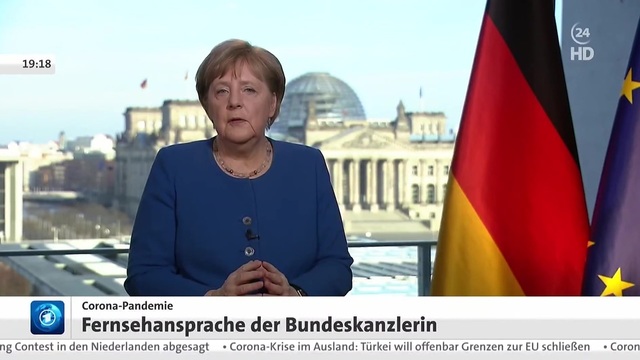
... dass wir unser Handeln möglichst gut begründen und kommunizieren, damit es nachvollziehbar wird.
... that we justify and communicate our actions as well as possible so that they are comprehensible.
Captions 19-20, Coronavirus: Fernsehansprache von Angela Merkel
Play Caption
And this hopefully also describes this lesson!
Further Learning
You can find many more adjectives like these on Yabla German, such as bezahlbar, dankbar, denkbar, and machbar. Before you look these up, can you guess what they mean?

In last week's lesson, we discussed N declensions in German that use nouns having to do with people, animals, and nationalities. To review, the term "N declension" means that there are certain mostly masculine nouns that have an "-n" or "-en" added to the end in all grammatical cases—except the nominative singular case. This week, we will take a look at some other categories of nouns that use N declensions.
There's yet another general category of people whose masculine nouns take the N declension:
Also die Haare, die Kleidung ... alles Mögliche, was an einem Menschen auffallen kann.
That is, the hair, the clothing... all sorts of things that can be noticeable about a human being.
Captions 4-5, Deutsch mit Eylin: Menschen beschreiben
Play Caption
Here the masculine noun der Mensch takes the N declension in the dative case. Other nouns in this general category of people that take the N declension include der Bauer ("the farmer"), der Held ("the hero"), der Nachbar ("the neighbor"), and der Held ("the hero"). Note that Bauer and Nachbar just take an -n ending rather than the more usual -en. Some noble titles used in names such as Prinz ("Prince"), Graf ("Count"), and Zar ("Tsar") also take the N declension. Unique among the religions, even der Christ ("the Christian") uses the N declension.
The next category is professions:
Elegant, fast schwungvoll: die Kuppel des britischen Architekten Sir Norman Foster direkt über dem Plenarsaal.
Elegant, almost bold: the dome of the British architect Sir Norman Foster directly above the plenary chamber.
Captions 12-13, Berlin: Hauptstadt des vereinten Deutschland
Play Caption
The profession der Architekt ("the architekt") becomes des Architekten in the genitive case. Other professions taking the N declension include der Chirurg ("the surgeon"), der Katholik ("the Catholic"), der Philosoph ("the philosopher"), der Pilot ("the pilot"), and der Poet ("the poet").
The next category of N declension nouns are objects:
Aber du wolltest uns doch heute einen Androiden zeigen!
But you wanted to show us an android today!
Caption 56, Es war einmal... der Weltraum: Die Saurier
Play Caption
The noun der Android becomes den Androiden with the N declension. Other masculine nouns for objects that take the N declension include der Automat ("the automat"), der Asteroid ("the asteroid"), der Diamant ("the diamond"), der Telegraf ("the telegraph"), der Planet ("the planet"), der Komet ("the comet"), and der Satellit ("the satellite").
Stay tuned for Part III of "The N Declension in German" in the coming weeks. We'll be taking a look at some exceptions in the N declension category and show you a master list of N declension words.
Further Learning
Take a look on Yabla German for some of the words above to see them used in a real-world context. Be careful when searching for words used in an accusative, dative, or genitive case—otherwise the words you found will likely just be plural nouns and not N declensions at all!

From cooking programs to videos featuring open-air markets, we have lots of food-related content on Yabla German. Just recently, we sent out a lesson about ordering in restaurants. This week, let's look at vocabulary you'll need for navigating a grocery store in Germany. Let's start with the food groups:
Im Sommer kann man das verschiedene Obst und Gemüse sehen, das hier angebaut wird.
In the summer, you can see the various fruits and vegetables that are grown here.
Captions 9-10, Berlin: Domäne Dahlem
Play Caption
Viele Getränke, aber auch Milchprodukte wie Sahne und Joghurt sind in Mehrwegflaschen oder -gläsern erhältlich.
Many drinks, but also dairy products such as cream and yogurt, are available in returnable bottles or jars.
Captions 11-12, WWF Deutschland: Tipps zur Vermeidung von Plastikmüll
Play Caption
Und mein Vater wollte sie darin unterstützen, und aß dann auch kein Fleisch, keinen Fisch und keine Eier mehr.
And my father wanted to support her and then also ate no more meat, no more fish, and no more eggs.
Captions 12-13, Deutsch mit Eylin: Ernährungsformen
Play Caption
Die Säcke mit Getreide und Kartoffeln waren bald leer.
The sacks with grain and potatoes were soon empty.
Caption 37, Märchen - Sagenhaft: Die Weiber von Weinsberg
Play Caption
Here are some additional categories of groceries:
Da fehlen die richtigen Gewürze.
It lacks the right spices.
Caption 10, Nicos Weg: Was darf es sein?
Play Caption
Früher konnte man hier Körner, Kräuter und Gemüse kaufen.
Previously you could buy grain, herbs, and vegetables here.
Caption 33, Unterwegs mit Jenny: die Heidelberger Altstadt
Play Caption
Besonders groß sei die Nachfrage nach haltbaren Lebensmitteln wie Konserven und Nudeln.
Particularly high is the demand for non-perishable groceries like canned foods and pasta.
Captions 8-9, Coronavirus: Trotz Hamsterkäufen keine Versorgungsprobleme
Play Caption
Ihr mögt ja Experten in Sachen Geflügel sein.
You may be experts in poultry-related matters.
Caption 5, Großstadtrevier: Nicht mit mir
Play Caption
And finally, here is some additional vocabulary for your next grocery store visit: der Einkaufswagen (the shopping cart), der Einkaufskorb (the shopping basket), der Gang (the aisle), das Regal (the shelf), die Kasse (the cash register / the check-out), die Tiefkühlkost (frozen food), das Kühlregal (the refrigerated shelf), das Würzmittel (condiment), das Sonderangebot (the special offer), die Einkaufstüte/Tüte (the shopping bag), der Kassenbon/der Beleg (the receipt).
Further Learning
Look at your grocery list and practice asking where the various items might be found in German. You can also watch other videos related to food on Yabla German.

The term "N declension" sounds pretty formidable, but the concept is pretty simple: N declensions are primarily masculine nouns that have an "-n" or "-en" added to the end in all grammatical cases except the nominative case.
Included among these masculine nouns that take the N declension are many that describe a person, animal, or nationality, and end in "e."
Schnell infizierte der Hubschrauberpilot auch seinen Kollegen Karsten mit der Lust am Häkeln.
The helicopter pilot quickly infected his colleague Karsten with the desire to crochet.
Captions 28-29, Häkelhelden: Polizisten im Einsatz
Play Caption
Thus the nominative noun of the person, der Kollege, becomes den Kollegen in the accusative case. How do we know that Kollegen isn't the plural form? If Karsten's colleague Hans had been there too, it would have been "... auch seine Kollegen Karsten und Hans." The ending of the possessive pronoun or the definite article tells you if the noun is plural or not.
Masculine nouns for people that end in "e" and take the N declension also include: der Junge ( "the boy"), der Kunde ("the customer"), der Neffe ("the nephew") and der Hirte ("the shepherd").
Da gibt es zum Beispiel den Drachen der Kontrolle, den Drachen des Ergebnisses und den Drachen der Bedeutung.
For example, there is the dragon of control, the dragon of results, and the dragon of meaning.
Captions 26-28, Deutsch mit Eylin: Mein Bücherregal und Präpositionen
Play Caption
As you see, the mythical animal der Drache becomes den Drachen in the accusative case. Masculine nouns for animals that end in "e" and take the N declension also include: der Affe ("the ape"), der Bär ("the bear"), der Fink ("the finch"), der Hase ("the hare" or "rabbit"), der Löwe ("the lion"), der Ochse ("the ox"), and der Spatz ("the sparrow.")
Der Sohn eines Russen und einer Radiojournalistin hatte einen Ausreiseantrag gestellt.
The son of a Russian and a German radio journalist applied for an exit visa.
Here, the masculine noun ein Russe becomes eines Russen in the genitive case. Other nationalities that take the N declension include der Grieche ("the Greek"), der Ire ("the Irishman"), der Finne ("the Finn"), der Pole ("the Pole"), der Rumäne ("the Romanian"), der Slowake ("der Slovakian"), der Tscheche ("the Czech"), and der Türke ("the Turk"). Although referring more to an ethnic group or religion than a nationality, der Jude ("the Jew") also takes the N declension.
It may take some time before you start speaking and writing the N declensions correctly. A big part of learning this simply comes from hearing and speaking enough German over the course of several years. And remember: even native German speakers get it wrong occasionally, so don't feel too bad if it seems difficult: it truly is!
Stay tuned for Part II of "The N Declension in German" in the coming weeks.
Further Learning
Yabla published a lesson related to this topic in 2016: Read "Weak Masculine Nouns Not Ending in -E" and see if that helps you to further understand this Yabla German lesson.
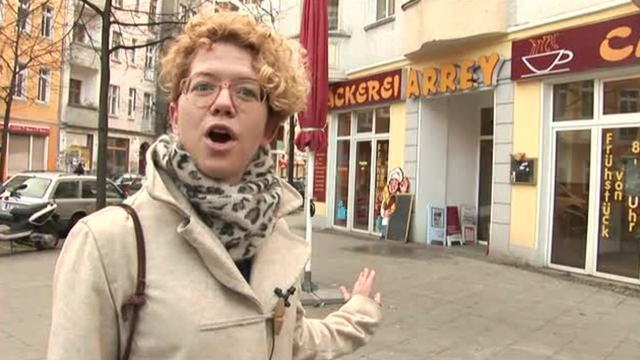
Even with our smartphones and GPS, we sometimes need to ask a local for directions or where we can find a certain type of establishment. Let's look at some important verbs and phrases you need to know.
Wie komme ich von hier zum Hauptbahnhof?
"How do I get from here to the main train station?
Caption 66, Deutsch mit Eylin: Öffentliche Verkehrsmittel in Hamburg
Play Caption
In addition to this structure, you should know the words der/die/das nächste and der/die/das nächstgelegene (singular), as well as in der Nähe.
Wo ist die nächste / die nächstgelegene Tankstelle?
Where is the nearest gas station?
Gibt es einen Geldeautomaten in der Nähe?
Is there an ATM nearby?
Das ist im Zentrum, in der Nähe vom Arbeitsamt.
That's in the city center near the employment office.
Caption 13, Nicos Weg: An der Ampel links
Play Caption
Wenn ich mich nun plötzlich für Mantras interessiere, gehe ich in die nächste Buchhandlung
If I'm suddenly interested in mantras, I go to the nearest bookstore
Captions 51-52, Deutsch mit Eylin: Informationsfülle
Play Caption
Das nächstgelegene Krankenhaus wird angeflogen.
[They're] flying to the nearest hospital.
Caption 12, Rettungsflieger: Im Einsatz
Play Caption
When giving directions, the word for straight is geradeaus, and this can be combined with gehen or fahren. For turning, you can say abbiegen, but also fahren for someone who's in a car or on a bike.
Am Zoo musst du ungefähr noch mal hundert Meter geradeaus.
At the zoo you have to go straight again about a hundred meters.
Caption 43, Melanie und Thomas: treffen sich
Play Caption
Also, geradeaus, dann rechts, dann links, und dann wieder geradeaus, ja?
So, straight ahead, then right, then left, and then straight again, yes?
Captions 19-21, Mein Weg nach Deutschland: Unterwegs auf der Straße
Play Caption
To cross a street or plaza, you can use the verb überqueren or simply gehen with the preposition über.
Da muss man aufpassen, wenn man die Straße überqueren will.
You have to be careful when you want to cross the street.
Caption 22, Shuah: Auf der Straße in Berlin
Play Caption
Dann geht ihr über den Grafenplatz und kommt in die Krugstraße.
Then you cross Grafenplatz and get on to Krugstrasse.
Caption 19, Nicos Weg A1 Folge 42: An der Ampel links
Play Caption
Giving directions can quickly get quite complicated! Here's an example with other important vocabulary, such as the separable verbs entlanggehen and vorbeigehen.
Geht die Krugstraße entlang, überquert die große Kreuzung, dann geht ihr am Theater vorbei und an der nächsten Ampel rechts. Weißt du, wo?
Go along Krugstrasse, cross the big intersection, then you go past the theater and turn right at the next traffic light. Do you know where it is?
Captions 22-25, Nicos Weg A1 Folge 42: An der Ampel links
Play Caption
Further Learning
Pick four locations in your neighborhood and practice describing how to travel between them. Then describe where the nearest ATM, pharmacy, or gas station can be found, consulting the examples on Yabla German if you need more guidance.
In a previous lesson, we saw examples of the verb annehmen and the verb / preposition combination davon ausgehen translated as "to assume." These are among the most common words for "assume," but let's take a look today at some more German verbs that can also be translated as "assume."
Ja, vorausgesetzt, Sie unterschreiben dieses Schuldbekenntnis.
Yes, assuming you sign this confession.
Caption 24, Marga Engel schlägt zurück; Der Engel von Leipzig
Play Caption
The separable verb voraussetzen is also commonly translated as "to provide," in the sense of fulfilling a condition.
Es wird allerdings auch behauptet oder vermutet.
However, it is also claimed or assumed.
Caption 8, Es war einmal... der Mensch: Der Neandertaler
Play Caption
The verb vermuten is also often translated as "to suspect," "to presume," or "to expect."
Trifft ein Goalgetter mal nicht das Tor, wird ihm sehr schnell eine Formkrise unterstellt.
If a goal-getter doesn't make a goal, a lack of form is very quickly assumed.
Caption 7, Fußball und die Frauenwelt: Der Goalgetter
Play Caption
The verb unterstellen may also be translated as "to imply," depending upon the context.
All of the verbs above deal with the definition of "to assume" as "to take for granted or as true." But there are also definitions of "to assume" that mean "to place oneself in," or "to feign," or "to take over" something such as a debt or responsibility.
Deshalb bin ich der Ansicht, dass Kapitän Dickie, der sehr erfahren ist, das Kommando übernehmen soll.
Therefore, I am of the opinion that Captain Dickie, who is very experienced, should assume command.
Captions 26-27, Es war einmal... der Weltraum: Die Saurier
Play Caption
Du sollst hier auch mal ein bisschen Verantwortung übernehmen.
You should also for once assume a little responsibility.
Caption 21, Großstadtrevier: Von Monstern und Mördern
Play Caption
The verb übernehmen may also be translated as "to take over."
Tourismus spielt hier und in vielen anderen Ländern eine immer wichtigere Rolle.
Here and in many other countries, tourism is assuming an increasingly important role.
Caption 5, WissensWerte: Tourismus und Nachhaltigkeit
Play Caption
The verb spielen is often translated in this context as "playing" a role, however "assuming" a role may be an equally valid option.
The verbs anmaßen and mutmaßen are occasionally translated as "to assume," but often anmaßen is more accurately translated as "to presume," and mutmaßen as "to conjecture" or "to speculate."
Further Learning
Go to Yabla German and search for the verbs above to see the various German translations in a real-world context.

One of the first phrases you learned in German was likely similar to the following:
Hallo, mein Name ist Julia und ich komme aus Düsseldorf.
Hello, my name is Julia and I'm from Dusseldorf.
Caption 1, Die Wohngemeinschaft: Besuch
Play Caption
Several German prepositions can be translated as "from," but when talking about the permanent fact of your country of origin or hometown, you will always use aus.
There are instances, however, where von is used with the verb kommen to reference location. One is when you are talking about getting from place to place:
Aber wie komme ich von Deutschland nach England oder Schottland?
But how do I get from Germany to England or Scotland?
Caption 16, Jenny: Reiseziele
Play Caption
Wie komme ich von Stuttgart zum Europapark?
How do I get from Stuttgart to Europapark?
Caption 12, Reiseplanung: Anruf bei einem Reisebüro
Play Caption
Kannst du mir bitte den Weg erklären, wie ich von hier aus am besten zur Stadthalle komme?
Can you please explain to me the way to get to City Hall most easily from here?
Captions 31-32, Melanie und Thomas: treffen sich
Play Caption
In these sentences, von is paired with the appropriate preposition for the place that follows.
Another instance in which the preposition von is used is when a person has just been somewhere and expresses that they have come directly from that location.
Ich komme gerade von der Agentur für Arbeit.
I have just come from the employment agency.
Caption 19, Nicos Weg: Weiterbildung
Play Caption
One thing to be aware of is that there are also two separable verbs, davonkommen and auskommen, which have distinct meanings. In this case, what looks like a preposition is actually part of the verb.
Ich weiß gar nicht, wie die Menschen früher ohne Kreditkarte ausgekommen sind.
I have no idea how people got by before without credit cards.
Caption 18, Kein Kredit: im Land der Klone
Play Caption
Das heißt, so ein Verleumder kommt einfach ungeschoren davon?
That means such a slanderer easily comes away unscathed?
Caption 22, Die Pfefferkörner: Gerüchteküche
Play Caption
Further Learning
After looking at these examples from Yabla German, create your own sentences or questions (one of each type!) to practice saying out loud.
Da gibt es Zahlen und man muss addieren, subtrahieren, multiplizieren und dividieren.
There are numbers, and you have to add, subtract, multiply, and divide.
Captions 4-5, Deutsch mit Eylin: Denk schnell!
Play Caption
Welches Fach ist das? Ja, das ist Mathematik oder Mathe.
Which subject is this? Yes, this is mathematics or math.
Captions 7-8, Deutsch mit Eylin: Denk schnell!
Play Caption
To add (addieren), subtract (subtrahieren), multiply (multiplizieren) and divide (dividieren) form the four elements of elementary arithmetic (die Grundrechenarten). And we all know that 1 + 1 = 2, which we say out loud as "one plus one equals two." But how do we say these basic calculations in German?
With addition (die Addition), we use the plus sign ("+," das Pluszeichen). To make an equation (die Gleichung), we also need the equal sign ("=," das Gleichheitszeichen).
To learn to speak a basic equation, let's take the basic 1 + 1 = 2 as an example:
Eins plus eins ist gleich zwei.
One plus one equals two.
Sometimes native German speakers drop the gleich and just say ist. It's also common to hear the slang version, much as in English:
Eins and eins macht zwei.
One and one makes two.
Let's keep to the more formal versions from here on out, though!
In subtraction (die Subtraktion), we use the minus sign (das Minuszeichen):
Eins minus eins ist gleich null.
One minus one equals zero.
With multiplication (die Multiplikation), you'll see the multiplication sign ("x," das Malzeichen). Note that mal is often used in German to refer to the frequency or number of times something has happened, such as in "once" (einmal), "twice" (zweimal) or "three times" (dreimal).
Zwei mal zwei ist gleich vier.
Two times two equals four.
The last section of elementary arithmetic is division (die Division). This uses the division sign (das Geteiltzeichen) which may be written as ":," "÷," or "/."
Vier geteilt durch zwei ist gleich zwei.
Four divided by two equals two.
Native German speakers sometimes drop geteilt and simply say vier durch zwei, for example.
So while even the basic German math terms aren't super easy, at least they're easier than math itself.
Ich fand Mathe immer super ätzend.
I always found math really unpleasant.
Caption 22, Nicos Weg: Schule
Play Caption
Further Learning
Get together with another student and write out some numerical addition, subtraction, multiplication and division equations. Then take turns reading them aloud. You can also go to Yabla German and search for Mathe and Mathematik to find some videos where the topic is discussed.
In the spirit of the season, today's newsletter is about expressing joy and happiness with the reflexive verb sich freuen. You may know that the related noun is die Freude, which is the German word for "joy."
For sich freuen, what can get confusing is whether to use the preposition auf or über, and sometimes you don't need either. First, let's take a look at sentences in which a subordinate clause with dass allows the expression of happiness, joy, or contentedness about something that is either happening or has already happened.
Amy, wir freuen uns total, dass du bei uns bist.
Amy, we're really happy that you're with us.
Caption 68, Cats: Amy singt „Erinnerung“ bei The Voice Kids
Play Caption
Ich freue mich sehr, dass wir die Eröffnung der Verhandlungen beschließen konnten,
I am very pleased that we were able to decide to begin the negotiations,
Caption 23, Angela Merkel: Gemeinsame Pressekonferenz mit Barack Obama
Play Caption
This can also happen with the conditional and may involve the conjunction wenn:
Wir würden uns total freuen, wenn ihr beim nächsten Mal zu uns kommt.
We would be very happy if you joined us next time.
Caption 60, SingInKA-Chor: Interview
Play Caption
Aber ich würde mich auf jeden Fall freuen, sie mal kennenzulernen.
But I would definitely be happy to meet her.
Caption 21, Cassandra Steen: Interview
Play Caption
Often, however, there is no subordinate clause, and what is happening or has happened is expressed with a noun. In this case, you need the preposition über, which in this case translates to "about."
Der Tierschutzverein Nied freut sich über jede ernstgemeinte Unterstützung.
The Nied Animal Protection Society is happy about any serious support.
Caption 58, Für Tierfreunde: Tierheim Nied
Play Caption
Veranstalter Christian Müller freut sich über die hervorragenden Rahmenbedingungen.
Organizer Christian Müller is happy about the outstanding conditions.
Caption 31, Wintersport: Engadin Snow 2009
Play Caption
With the preposition auf, the meaning of sich freuen changes slightly, because the future is referenced. Therefore, the most common translation of sich auf etwas freuen is "to look forward to something."
Sie freuen sich auf diesen Tag, genauso wie auch ich.
They're looking forward to this day, just like I am, too.
Caption 7, Allessa: Zu Weihnachten wünsch ich mir dich
Play Caption
Ich freue mich auf deine Nachricht.
I'm looking forward to your message.
Caption 46, Deutsch mit Eylin: Ernährungsformen
Play Caption
Further Learning
What are you happy about? What are you looking forward to? Construct a few sentences, looking for extra examples on Yabla German if you get stuck.

 Spanish
 French
 Italian
 Chinese
 English
 English
  Español
 Français
 Italiano
 Português
 Deutsch